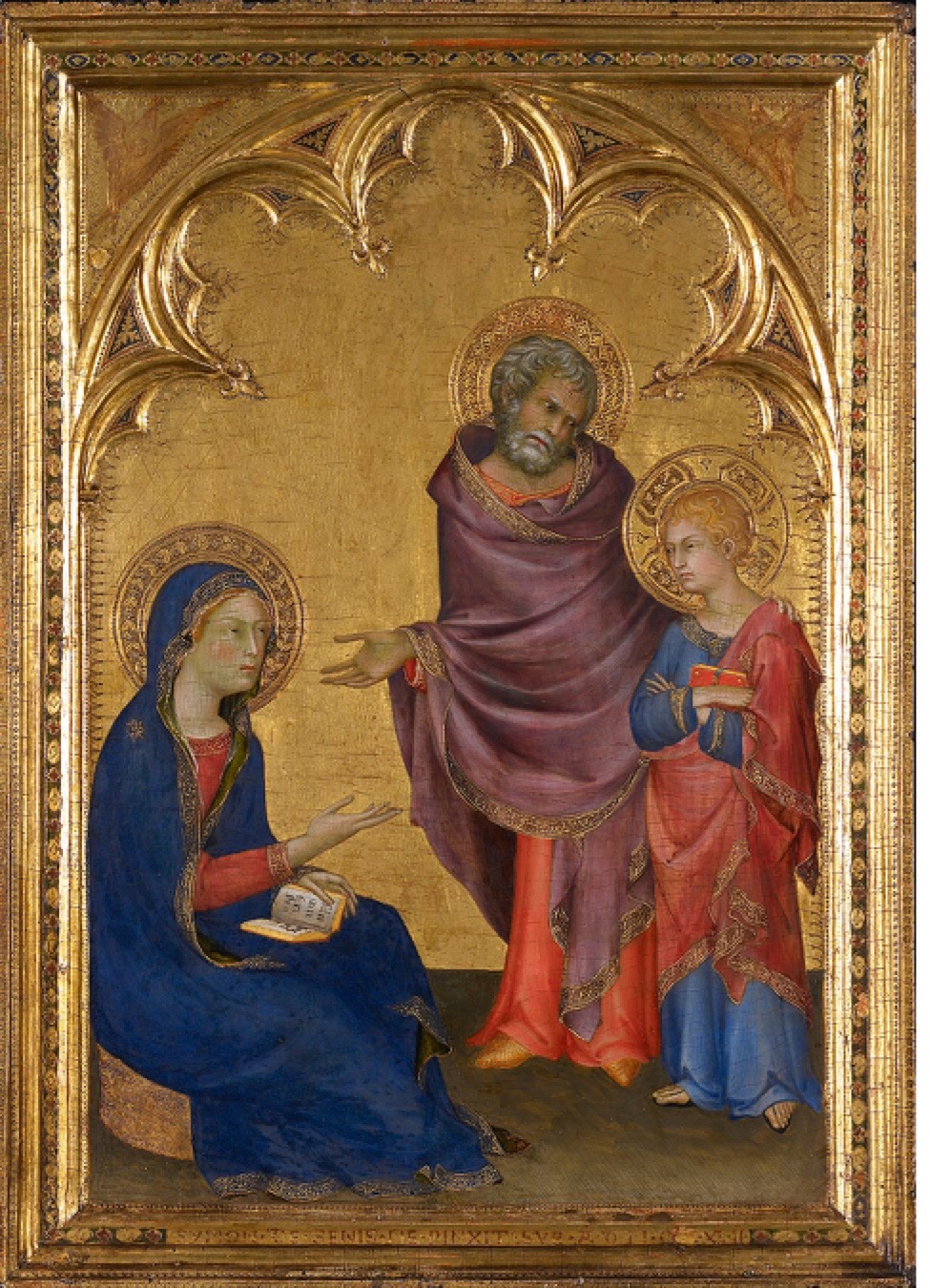
Our readings for this Sunday, the Feast of the Holy Family of Jesus, Mary, and Joseph are here. The readings are again ABC, so I have used the notes from 2017 (Cycle A).
These are the poems, my notes, and interpretations of Fr Dennis’ homily from the 10AM Mass on December 31, 2017. And a couple tip-ins on the nature of what a Holy Family is!
______
The poems Fr Dennis references in 2017 are:
Advent by Mary Jo Salter (2017 homily)
Course of Treatment of Treatment by Linda Pastan (2017 homily)
Vocational Training by Carrie Shipers (2017 homily)
and Fr Tom McClain, SJ in 2014 offered a homily that has stuck with me,
and, likewise, Fr Peter Fennessy, SJ contributed a visual image.
In 2017 with Fr Dennis, we reflected on —
- Simeon and Anna are the symbolic grandparents in the story of the Nativity. In the apocrypha, stories are told of Mary’s parents, Anne and Joachim. Over time we have come to celebrate them on July 26th. However, Simeon and Anna represent Jesus’ grandparents in this early story in Jesus’ life. Both the symbolic and the actual grandparents are our reminders that Emanuel, God-with-us, came to “pitch tent” with us, that his humanity fully encompasses ours. And so eventually through the resurrection, our humanity is resurrected with his fully shared humanity into the divinity of God. In short, humans have grandparents, so our savior had grandparents as part of his fully human experience.
- All the readings encompass the themes of
- looking back, reflectively, as Simeon recalls the prophecy from earlier in his life; of beginning leanings, such as both Simeon and Anna offer about Jesus,
- and of families, as all of the readings offer — with concessions to the culture and language of their times.
- In Mary Jo Salter’s poem, Advent, she captures the sense that Advent = Coming and how a mother and daughter inhabit Advent, the coming, and the becoming of their space and relationship together. The poem shares the holiness of the interweaving and recognition of our lives with each other and with the physical world.
- Linda Pastan’s Course of Treatment has 40 visits of (probably) a spouse, but an unnamed relation, being released from treatment for a new year, with hope.
- In Carrie Shipers’ Vocational Training she presents the wisdom internalized and practiced by her mother, a doctor. You get the sense of the Anna type wisdom and the details of advice, the practice we need so we “know what to do” in the moments of need.
- So we pray for our families — biological (through birth), adopted (our functional families), social (varied), and global (all of humanity) — that we may create more loving and giving, inwardly and outwardly, families.
In 2014, Tom McClain offered that Holy Families are our communities that offer
- the gift of intimacy;
- safety in our physical, emotional, intellectual, and spiritual beings; and
- apostolic mission/service for others, as in I love you but I’ll let you go to do what you must for Christ. In other words, the absence of an authentic sense of service for others eventually leads to interior rot.
Holy Family Imagined
On one of my (rl’s) retreats at Manresa Jesuit Retreat House, Fr Peter Fennessy, SJ shared our featured image of “Christ Discovered in the Temple” by Simone Martini (1342). It is from a scene in scripture (Luke 2:41-50) just before “the hidden years” of Jesus (Luke 2:51-52). (Correct! — it is not an image matched to today’s gospel reading, but it captured the flavor of Fr Dennis’ homily message better.)
Jesus has, in essence, ditched his parents and family caravan to return to the Holy Temple in Jerusalem to be “in my Father’s house,” and the Holy Family is having a conversation after his human parents found 12-year-old Jesus three days later. Can you imagine?!
This image reminded me of D2’s main theme that Jesus lived all of our family experiences, including adolescent challenges. Martini’s image of the expressions on Mary’s, Joseph’s, and Jesus’ faces are those of human families past, present, and future. Exasperation, anguish, frustration … all these are part of Holy Families, as are patience, tenderness, and love.
I found myself so relieved on sitting with this imagining — for contrition of some of my adolescent behavior, for renewed compassion toward my parents’ human frailties, and redoubled gratitude for their many, many gifts of love they gave beyond our human limitations.
 The Surest Sign