Fourth Week of Advent Cycle C

Our readings for this Sunday, the Fourth Sunday of Advent, are here.

Again, these are my notes and interpretations of Fr Dennis’ homilies from the December 20, 2015 5PM and December 23, 2018 Masses.  And a surprise selection from Fr Eric Sundrup in 2015.  So … many poems to help light our path through scripture this week!

______

The poems Fr Dennis references in 2018 & 2015 are:

Mrs. God by Connie Wanek (2018 homily)

December by Gary Johnson (2018 and 2015 homily)

On the Mystery of the Incarnation by Denise Levertov (2015 5PM Mass)

and Fr Eric Sundrup, SJ in 2015 used The Risk of Birth, An Advent Poem by Madeleine L’Engle.

In 2018, we reflected on —

  • how remarkable children are, particularly as we had the beautiful baptism of Adelaide at the 5PM Mass — remember how much joy the baptisms brought to the Sunday masses?  The children scurrying to the choir loft, so they could look down, God’s Eye view?, on the proceedings.  Gary Johnson captures this integration of faith and action in children in his poem December.
  • This Sunday’s psalm has an interesting refrain — “Lord, make us turn to you; / let us see your face and we shall be saved.”  It is unusual because the face of God was historically and culturally thought by the Hebrews to be unbearable, e.g., Moses’ shining face after seeing the face of God (because they were friends).  The people wanted Moses to cover his face.  In other times, people were thought to die if they were to behold the face of God.
  • But, as Christians, we see the face of God in an infant, Jesus, like our little Adelaide of the blessing today.  God wanted to give God’s self soooo completely that God became one of us as a babe.  (Rainey’s contribution of a poem!)
  • In the gospel, Mary is blessed because she believes what God told her, i.e., Gabriel’s message, and this is in addition to the great trust in God or nature that we, and women in particular, must have in the process of birth, that all will work out as it should.
  • What gives these moments of revelation that we hear in scripture of Micah and the gospel with Mary and Elizabeth?
    • God coming in utter helplessness to be with us.
    • The newness in each repetition of ritual, like our baptism today, our communion rite and line, like the Gary Johnson poem — a poem in sonnet form with many external references to Christmas Hymns (“for the faithful to come ye,” “Joyful and triumphant,” “the partridge in a pear tree,” and more).
  • The Connie Wanek poem, Mrs. God, is fun, and a reminder that as we begin and continue on our journey with Cycle C, the gospel of Luke has many more women characters than the other gospels.

In 2015, we reflected on —

  • In Denise Levertov’s poem, On the Mystery of the Incarnation, she begins with “It’s when we face for a moment / the worst our kind can do / …” that we hold the context of our saints choices and God’s Love in awe:  Mary had to trust the message of Gabriel; Joseph had to trust his dream/vision; Elizabeth had to believe in her pregnancy after the cruelty of all those years; Mary & Joseph’s visit to the temple with Jesus and meeting Anna & Simeon — Is this child really that special?  Because Jesus was growing just like any other child.
  • God sent God’s Son not to one of the innocent forms of creation but to us “tainted” humans locked in “our ugly failure to evolve.”
  • Gary Johnson’s December, as we discussed above, is a sonnet with AB, CD, and EF couplets of rhyming scheme) invoking external references to familiar Christmas hymns.  Somehow, the child of the poem, singing, is the hope and faith of all the years, even into the dark.  (Hark!) 
  • The cameo poem by Fr Eric Sundrup, The Risk of Birth, An Advent Poem , is the message that Love risks, because love is grateful and realizes that what it has received is a gift, and so it’s not afraid to risk it all.  As Madeleine L’Engle writes:  This is no time for a child to be born … And yet our God came and pitched God’s tent among us.

O Come, O Come, Emmanuel! 

Third Sunday of Advent Cycle C

Our readings for this Sunday, the Third Sunday of Advent, are here.

This is the poem, my notes, and interpretations of Fr Dennis’ homily from the 8:30AM Mass on December 13, 2015.

“Walking to Jerusalem” by Philip Terman

______

  • Gaudete Sunday is a brief relaxation during Advent.  All of Advent is waiting in hope, but Gaudete Sunday emphasizes the hope.
  • In the gospel, John the Baptist “preached good news to the people.”  It sure didn’t sound like it – “fly right or else!”, and he’s gonna baptize you with fire! Recall that people experienced John the Baptist physically pouring water over them for baptism … and he’s saying Jesus is going to use <gulp> fire?!?  This is good news?!?
  • So what are supposed to do?  Live good lives.  Live our lives well, do so with reflection, and do so for God because we are God’s.
  • Note that John the Baptist was wrong.  He foresaw that someone “mightier” than him was coming (correct) and would be more fiery than he was (incorrect).  Jesus is generally depicted as mild.  John the Baptist was right in general, but not in the details.
  • The poem ends with “And keep walking.”  This walking (and the rest of their walking) is an effort to make sense of the stuff they — the poet’s mother and her fellow walkers from her congregation — do every day. 
  • The change is internal because the journey, the walking toward God, is an interior experience and change.
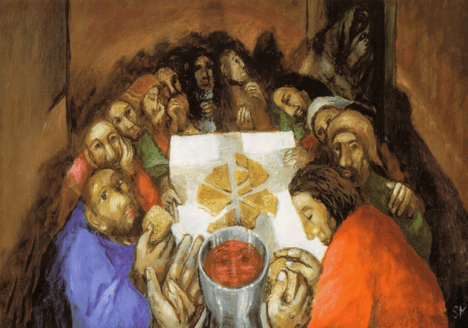
  • And we come to our “Holy Restaurant” for stories and this wayfarer’s bread. Now, we keep walking in our Mass together to the Liturgy of the Body.  Not that it changes everything, … but it does.

Second Sunday of Advent Cycle C

We should be about Day 6 into our chocolate Advent calendars.

Our readings for this Sunday, the Second Sunday of Advent are here.

Again, these are my notes and interpretations from the 8:30 and 10 (or Noon) Mass homilies of Fr Dennis Dillon, SJ, on December 6, 2015.  Anything that doesn’t quite make sense should be attributed to my note-taking frailties, and not his homily!  The answer is always God’s Love. 

______

The two poems he referenced with this homily are December by Gary Johnson and Patience by Kay Ryan.  Both capture the tension of Advent — waiting and hope.

Ryan writes:

Who would
have guessed
it possible
that waiting
is sustainable—
a place with
its own harvests.

and Johnson finishes his poem with:

Onward we go, faithfully, into the dark. // And are there angels hovering overhead?  Hark.

Today’s readings capture the sense that in these moments “… that they are remembered by God.”  Not vice-versa — we are rarely the ones remembering God. We forget God, particularly when we are in the good times.

For the ancient Jewish people, a core belief was centered on their temple in Jerusalem as the place where God manifested.  For us, the “temple” is where we gather, as the Body [of Christ].  The Holy Spirit activates it, in all our myriad experiences and stories.  These are very different concepts of “temple.”

Yet, the incarnation of Emmanuel — God-with-us, as Jesus of Nazareth, the Christ — resolves these differences.  People must have been in the presence of Jesus Christ in person and somehow associated that experience with their experience of being in or near the presence of God in the Temple.

When we’re in the desert spiritually, we experience the hole in our heart.  That is the way it is supposed to be.  We have a hole in our heart until we come to rest in God.  The quiet re-members us to God, to the Body of Christ.

______________

May we all receive the graces to have our paths straightened to make way and God’s good work in each of us completed.

First Sunday of Advent Cycle C

As we each prepare ourselves for the season of Lent, let us remember the reflection of David Steindl Rast, OSB: It’s not joy that makes us grateful, it’s gratitude that makes us joyful.

Our readings for this Sunday, the First Sunday of Advent are here.

Over the next four weeks, I’ll share the gospel and poetic reflections of Fr Dennis Dillon, SJ from his homilies during Advent (Cycle C) at St. Mary Student Parish in Ann Arbor, Michigan.  Anything that doesn’t quite make sense should be attributed to my notetaking frailties, and not his homily!  The answer is always God’s Love.

From Fr Dennis’ Noon Mass homily on November 29, 2015

The gospel is kind of frightening, however its message is meant to encourage us.  Don’t let the anxieties of daily life distract us, instead celebrate what’s coming  – that is, celebrate hope.

In the poem, “Want” by Carrie Fountain, about half way through the poem, she writes:

            learning how to hold hopelessness and hope together

That sense of hopelessness is captured when we feel that maybe these travails are all we get, and the sense of hope when we latch on to that sense of “Go on, break it open, let it go!”  The remainder of the poem captures this complex space into which we are called:

to see on the unharmed
surface of one
the great scar
of the other

Yes, we have to face our realities that generate hopelessness, like the gospel, terrorists, refugee crises.  Yet the poem and readings remind us to have both — hope and hopelessness.  There’s still hope even at the end, even in personal death.

Louse Glück in “The Night Migrations” accounts of the season changing with red berries, bird migrations, and that even in this inarticulate way, there is still hope.  The dead won’t be able to see the downward cycle or Christmas or spring.  But what does a soul do, once a person is dead?  She offers the solace that maybe even “not being” is enough.

The remembering of God’s action in our lives and world is a blessing and hope in itself, creating faith, hope, and trust in God.

From Celeste’s creativity! Our featured image is from a long time member of prayer community at St. Mary’s, Into the Light. Celeste is an artist and architect, and created this work for the season.

Thirty-Third Sunday in Ordinary Time, Cycle B

Our readings for Sunday are here

These are the poem, my notes, and interpretations of Fr Dennis’ homily from the Mass of

  • November 18, 2018  10AM

_______

The poem Fr Dennis references this year is:

  • Tosca by George Bilgere

In 2018, we reflected on —

  • The readings continue with the darker, apocalyptic feel as we near the end of the liturgical year.  A brief cameo by Fr Eric Sundrup, SJ, reminds us that we must continue to unveil God’s Love and Mercy.  We will not be overcome — “Heaven and earth will pass away but not my words,” says The Word.
  • D2’s main point of reflection: Both the first reading and gospel (from quite different eras of Jewish history) have us look back, but in those readings of the past we hear prophecies of the future — leaving us squarely in the present.  Why?
  • One reason is that we experience a common, a shared memory
    • Martin Scorcese shared that his films fulfill a spiritual need for him, to share a common memory
    • George Bilgere’s poem captures that sense of a shared present moment formed by a shared past from a listening to a record.
  • rl chimes in that musical recordings offer that gift, or period-instrument musical ensembles (e.g., Apollo’s Fire), or historic theaters (e.g., the Michigan Theater in Ann Arbor) in which we have our experience now, share it with all similar undated experiences (seeing any film in the historic theater), AND share across a century while watching in the 2020s a silent film from the 1920s accompanied by a live organist on the original organ.  It is simply a richer experience.
  • and one last rl chime of reflection — spending time with my Texas family works in my body and soul in a different way now that we have four generations, almost one century, of life in the same time and space — from the youngest grandniece to my Mom, in her mid-nineties.  Those invisible connections draw me to the darker ends — of the actuarial tables working against Mom, of what feels like an end to near unlimited human inhabitation of the planet — and to the light and hopes of the future and past — the doomsdays of Mom’s generation nearly a century ago — yet we are still here, the radiant gift of life in my nephew, niece, and the possibilities their families are.  They all illuminate and give depth to my present.  One more gift from the Cosmic Christ to be thankful for, as we round the corner to Thanksgiving in the United States.

Thirty-Second Sunday in Ordinary Time, Cycle B

Our readings for Sunday are here

These are the poem, my notes, and interpretations of Fr Dennis’ homily from the Masses of

  • November 8, 2015  Noon and 5PM

_______

The poem Fr Dennis references this year is:

In 2015, we reflected on —

  • The two readings are connected by widows, a condition created by death.  Today’s readings and this time of the liturgical year in the northern hemisphere have death lurking in the background (the content of the readings, the earth’s flora going to rest and fallow over the winter).
  • In the first reading, the threat of death pervades everything as —
    • Elijah is trying to find safety from lack of food in a drought
    • The widow — (matter of factly) I only have this, and it’s hardly enough.  My son and I will eat this and then we’re going to die.
    • Don’t worry, trust! Elijah exhorts.  God will provide.  So instead of sharing the bread with her son, the faithful widow takes it to the prophet (ancient rule of hospitality), and indeed, they all survive.
    • Absolute trust in God, her trust is the gift.
  • In the gospel, Jesus notes
    • the scribes “devour” the widows’ houses through taxes? through undue burdens and takings? It evokes anger because of the cruelty on top of the emotional loss and violation of Jewish law to protect widows and orphans (Ex 22:21).
    • how to help occurs through real faith.
    • Jesus notes she contributed all but is not (nor is Fr Dennis) recommending that everyone donate everything.  Instead, like the widow in the first reading, the idea to take in is that we shouldn’t cling to things.
  • In Philip Booth’s poem, Talk About Walking,
    • he commits to doing it (despite his uncertainty of destination) with spirit, faith, and trust in God. 
    • He’ll learn something — even though he’s dying (“feeling so centripetally old”).
    • The long walk is a metaphor for life.
    • Our Communion line is a metaphor for life as well, the journey with our hands open to giving and receiving / living and dying in the Eucharist.

I chose a path in the woods for the image as I couldn’t find a good image of bread being shared that didn’t feel like I was objectifying those who are in poverty. The image above may be subject to copyright, but I couldn’t find the name of the photographer.

The image of journey and uncertainty fit the week as many in the U.S. are struggling to understand the outcome of many of the election results. Those who support President-Elect Mr. Trump may be struggling over the failure of the majority of abortion restriction/elimination proposals. Those who support Vice-President Harris are struggling. So … we all have some long walks ahead of us alone and together.

I’ve begun to heal with long walks on beautiful autumn days and good dogs. I seem to have quit assigning votes to everyone based on appearance and facial expression. (A big step forward on my interior state!!) And, to our credit, there seems to be less denial, less gloating, and grief is being processed more appropriately than in the recent past elections.

For those of you who are international readers, please understand U.S. democracy is as much a mystery to us as it is to you. And many of us share the very same concerns that you do.

However, I work the elections, and they are fair and free due to the very hard work of many, many people — state, county, and city staff and citizen poll workers alike.

So we will all keep walking together. Hopefully, with God’s Grace, I will do my best to walk like Micah walks.

Twenty-Ninth Sunday in Ordinary Time, Cycle B

Our readings for Sunday are here

These are the poems, my notes, and interpretations of Fr Dennis’ homily from the Mass of

  • October 18, 2015  10AM

_______

The poems Fr Dennis references this year are:

  • Equinox by Barbara Crooker
  • Now by Barbara Crooker

In 2015, we reflected on —

  • James and John were nicknamed “Sons of Thunder” — no one knows how they got this nickname
  • The two say, essentially, we want to be known as the best: sit us at your right hand and left hand, and …
  • Jesus replies with what “the best” is: the suffering servant who
    • comes to serve people
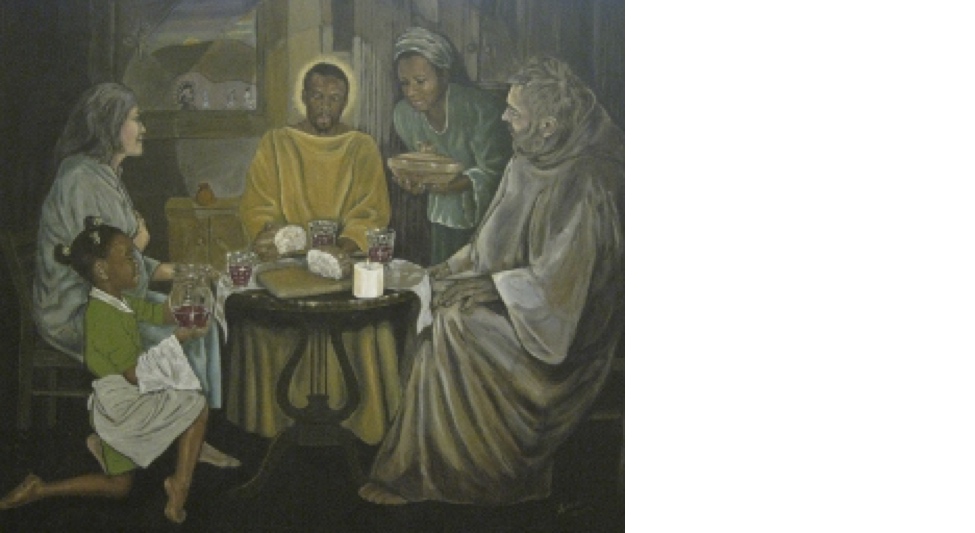
    • who walks and talks along with them, e.g., the Road to Emmaus
  • It’s interesting with all that God grants to Jesus — Jesus cannot give the place at either the right or left hand to whom he would choose (whether that would have been James and John or not).  It demonstrates that
    • he is human in that he can’t do so
    • But the “Son of Man” reveals a sense of knowledge derived from being divine
  • This time of year, we become conscious of having to get back indoors.  Fall goes to winter, death; we are living with diminishment.  In that sense, all of us are suffering as we’re not the best.
  • But, living with our ordinariness is always difficult, as the Barbara Crooker poems share so well.

Twenty-Fifth Sunday in Ordinary Time, Cycle B

Our readings for Sunday are here

These are the poems, my notes, and interpretations of Fr Dennis’ homilies from the Masses of

  • September 23, 2018
  • September 20, 2015

_______

The poems Fr Dennis references this year are:

In 2018, we reflected on —

  • D2 offered that the poem helped us see the readings are about things that grow:
    • The glory of God in the grasses.
    • How adults might think a child spending a day in the fields returned “empty-handed” and that child’s view — what Jesus offers at the end of today’s gospel passage — of seeing God’s Creation in the native plants of the field — that may not look like much or have barbs, hooks, and thorns but help it hold on tight.
    • The plants that might seem “less” because they are not as showy, show the value of being together — those that “dig in, that burrow, that hug winds // and grab handholds // in whatever lean place. // // It’s been a good day.”
  • A cameo by Fr Eric Sundrup, SJ notes that gratitude helps us avoid the temptations of jealousy.
  • RL — the readings reminded me of Dumbledore’s quote in Harry Potter and the Philosopher’s Stone, in explaining to Harry how his spell kept the stone and its powers from being misused,  “Only a person who wanted to find the stone, find it, and not use it … would be able to get it.”  The hallmark of the child in us is the opposite of the apostles’ discussion (gospel) and the darker spirits mentioned in the first two readings.

In 2015, we reflected with Fr Dennis that —

  • The first reading of Wisdom has a dark feel to it, a malicious sense in that they’re out to prove and test through punishment and torture of someone to see if he / she will keep believing in God.
  • And the gospel passage from Mark … well ..
    • and this is what is going to happen to Jesus, per Jesus.  Then the apostles grow quiet and uncomfortable in the face of Jesus’ real challenge / danger and begin to debate who is the greatest among themselves, the apostles.  Who’s the best?
    • That jostling can sometimes be a good source of motivation in, say, learning.  But, it can also get in the way of following Christ. 
    • Jesus closes his teaching with the example of holding the child.  In his time and place, the child was an outsider, the work of women … not a model for grown men … but that’s what Jesus was saying, once again upending the culture in favor of God’s Love (see also, e.g., the Parable of the Good Samaritan, set in a culture and time in which a Samaritan would have been the last person a Jewish person would rescue or want to be rescued by).
    • And this teaching underscores how remarkable it was that Jesus doesn’t engage in a “Look at me! at how grand I am!” style of ministry.
  • Poetry also asks us to look at things, at life differently.  Andre Segovia (most active in the first half of the 20th century) and Julian Bream (most active in the second half of the 20th century) were preeminent classical guitarists.  Jesus was self-taught, too, an original who you always wanted to hear what he had to say … because he was an original.
  • Jesus models to us to be creative and to be a source of real life / living in the Lord’s Spirit.

Sixteenth Sunday of Ordinary Time, Cycle B

Our readings for Sunday are here

These are the poems, my notes, and interpretations of Fr Dennis’ homily from the Mass of

  • July 26, 2015 Sun 5PM

_______

The poem Fr Dennis references this year is:

In 2015, we reflected on —

  • Both Jesus and the apostles are tired, maybe exhausted and are heading out to find a private, quiet place to pray and rest, but …
  • Jesus sees a vast crowd who has run around the lake to intercept them, has pity on them (the gut-wrenching, heart-breaking pity of the Good Samaritan parable) and then … teaches.  ?!?!?
  • Why no miracles this time?  Why teaching?  And, to top it off, Mark does not even share what Jesus taught, save to say “many things.”
  • What we can take from this sharing, then, is that the content of what Jesus said is relevant, but it is his person that was the remarkable thing.  He was compassionate, a shepherd, e.g., the way he goes about living his faith.
  • Peter Schmitt’s poem of Tin Ear shares a teacher’s approach to letting a student know he may is likely off-key, without saying a thing, a pastoral teacher.  No more group singing, but the poet’s enthusiasm for shower, car, and other private singing is not diminished in the least (“where [he’s] ready to sing // in a key no one has ever heard.”)
  • A cameo from Fr Eric Sundrup, SJ, at the Sunday 10AM Mass in which he emphasized how this passage emphasizes Jesus’ compassion arising from his relational Love; God IS relationship.  As we show more compassion, we show more people we are human, thus remind those who see that they are human, too.

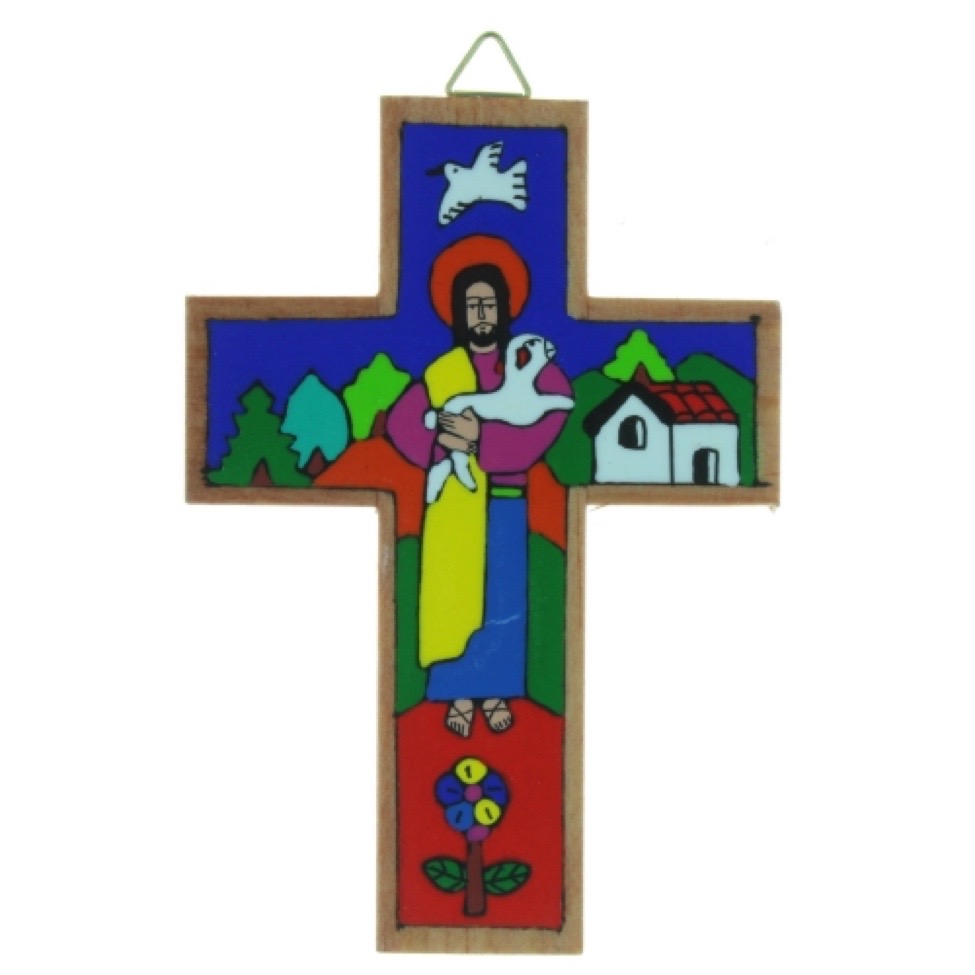
Our featured image is a repeat of “The Good Shepherd” by the late Fr Sieger Koder (1925-2015).  He was a German priest, WWII veteran, smith, and artist.  He retired from active priestly pastoral duties in 1995, but continued his artistry until he passed in 2015.  A gift of another 20 years to us all.  The Europeans have created a number of books offering retreat-like meditations using his work.

I continue to love the warmth and embrace of this Good Shepherd.  🙂

Eleventh Sunday in Ordinary Time, Cycle B

Our readings for Sunday are here

These are the poems, my notes, and interpretations of Fr Dennis’ homily from the Mass of

  • June 14, 2015 10AM & 5PM

_______

The poem Fr Dennis references this year is:

In 2015, we reflected on —

  • The readings are about things that grow:
    • The first reading of Ezekiel 17:22-24 focuses on the cedar of Lebanon
    • The Gospel of Mark 4:26-34 is Jesus using seeds and the mustard seed to convey the Good News.
  • And regardless of the farmer’s efforts in the gospel reading, the seeds grow (or don’t), i.e., God is in control of what grows and doesn’t.  This might also be said that the gospel grows itself, we will likely not know or see the fruits of our labor.
    • Jesus is clear that the seed has a way to grow in and of itself, and by analogy, it is impossible for us to quench the reign of God, and
    • it is that Godliness that sustains and calls each of us through our lives and challenges
  • Paul Zimmer’s poem is a loving look at trees, their growth, and the poet’s eventual death to “hover above” and “To see at last what held the darkness up.”  It reminded D2 of the cedar of Lebanon in the first reading.
  • John Updike’s Chicory poem describes the inevitability of growth in all circumstances by the grace of God.

The seasons in the upper Midwest / Great Lakes region illustrate these ideas so vividly — the stunning growth from April through September, the gradual letting go that begins in August as color, leaves, and energy leave the portion of the tree above ground, the deepest of deep sleep and life occurring beneath the snow and ground … waiting, just waiting to burst forth — while we of little faith on the wintry grounds above doubt its return.  And that final doubt makes the bursting forth, bud by bud, from late February on feel like a miracle every year.  Another gift of gospel well-received, it always feels new.

Our image today is one of “free” Chicory, growing in a field. The photos are taken by the author of Stephen’s View (a member of the UK and Eire Natural History Bloggers, and can be found at his blog Random Jottings (though this blog does not see activity since 2020) He notes in his blog chicory are more often in the 3′ to 4′ range, but these were 6′ tall! These are European chicory which were introduced to the Americas and Australia.