Thirty-Fourth Sunday of Ordinary Time, Cycle A

The Solemnity of Our Lord Jesus Christ, King of the Universe

Our readings for Sunday are here

These are the poems, my notes, and interpretations of Fr Dennis’ homily from the Mass of

  • November 26, 2017 10AM
  • November 23, 2014 10:10AM

_______

The poem Fr Dennis references this year is:

In 2017, we reflected on —

  • how part of the first reading (Ezekiel 34:15-17) and the gospel (Matthew 25:32-34) focused on the different judgments for sheep and goats.  He suggested a good website of sheepandgoats101.  I’m not sure this is it, but this is what I found: https://backyardgoats.iamcountryside.com/feed-housing/feeding-goats-and-sheep-101/
  • the gospel describes the attributes of the sheep, people, and nations on the king’s right in the remainder of the passage.  “I was hungry, and you gave me food; I was thirsty and you gave me drink, …”
  • how there are people who live the works of mercy (feed the hungry, clothe the naked, …) and then find out Christ was in the poor, the hungry …
    • they have a natural sympathy with those in need
    • almost a religion, in that they don’t even really know they’re “living the gospel”
  • our Collect prayer from the Sacramentary (Roman Missal), “Almighty Ever-Living God, whose will is to restore all things in your beloved Son, King of the Universe” addresses another aspect of the end time: God will make things right — justice to and throughout the entire world.

In 2014, we reflected that —

  • it’s important to note what is not said in the gospel: the Judgment isn’t a vindication of Jesus’ teaching because his teaching isn’t about doctrinal matters.
  • the important message (and main point) of the gospel is that
    • we help one another; that we simply be good human beings, and
    • how important service is to the community and ourselves; concern for the poor is mentioned 1 time per 10 verses in the Christian Scriptures (New Testament), 1 time per 4 verses in the gospel according to Luke, and a staggering 1 time per 3 verses in the Epistle of James.
  • Barbara Crooker’s poem engages with what is gold?  what is important? — olive oil, the miracle of many meals from one … from the fat that looks like molten gold.
  • the judgment and The Judgment are about the every day — to be kind, to be good, to be human, to be thoughtful.

Thirty-Third Sunday of Ordinary Time, Cycle A

Our readings for Sunday are here

These are the poems, my notes, and interpretations of Fr Dennis Dillon SJ’s homily from the Mass of

  • November 16, 2014 Noon

_______

The poem Fr Dennis references this year is:

In 2014, we reflected on —

  • Fr Dennis regularly went up north to help catalogue a collection by “The Doctor,” a medical doctor who collected seemingly the largest number of unrelated items imaginable — until the institute had D2 and others begin cataloguing the items.  A treasure trove – the Harrisville Cultural Institute (or sometimes Institute of Cultural Learning)!  When he visited Harrisville, D2 stayed with the diocesan priest, 80 years old, who served four parishes.  (Difficult but not uncommon nowadays, it seems — a distant Lamey cousin priest does a circuit of 240 miles between several parishes over the weekend in northeast Montana.)
  • The Anne Bingham poem offers what is enough to give meaning at the end of our lives, at the end of the world (as we approach the celebration of Christ the King next week). We belong, and we all belong to God.

My (rl) personal reflection on this gospel was that the master, God, offers Mercy or Love, and the only thing to do with this gift is to offer it to others or to praise God.  The servant who received one talent didn’t know or understand God’s Love, didn’t understand the talent itself was a gift. At the time one of my favorite motivational pop songs was Jewel’s Christmas rendition of “Hands.” I think of it as sung more to the forces of the world that would have us feel we can’t do anything, that small things don’t matter or change the world.

The Christian spirituality I learned from Dennis was kind and the exact opposite to the bullying of the world (including the Church) — small kindnesses do matter.

Or, if you’re a STAR WARS fan, remember … there are more of us who believe in Love and Light than those consumed by darkness, we simply have to offer our hands and share the Light of Christ, given to us in the Spirit of Love and Mercy by our Loving God. Northern hemisphere is growing dark, let your light through Christ illuminate these days!

A cameo by Dan Reim, SJ at the 9PM Mass (yes, 9PM! — a beautiful split liturgy in which the Liturgy of the Word was at one end of a consecrated basement hall, and we processed as a congregation — around 200 of us — to the other end of the hall with the altar, to celebrate the Liturgy of the Body; as Communion ended we returned to our original seats) offered that through God and abiding in God’s presence, ordinary acts are sanctified to help build the City of God with God’s hands, the very hands God gave us.

In a world at war (but, God be praised, not World War yet) — the peace and vision of the heavens that the astronomers are creating for us through the James Webb Space Telescope and now the European Space Agency’s Euclid Space Telescope is a wonderful contrast, and reminds me of the promise of the star who started three spiritual seekers on a caravan, in faith, to find a King, and adored the babe nonetheless. And so, two heavenly images of the Crab Nebula for us this post!

Sixteenth Sunday of Ordinary Time, Cycle A

Our readings for Sunday are here

These are the poems, my notes, and interpretations of Fr Dennis’ homily from the Mass of

  • July 20, 2014 Sun 8:30AM

_______

The poem Fr Dennis references this year is:

In 2014, we reflected on —

  • It’s parable time in the reading cycle — lots and lots of parables, last week the seeds and soil, this week the mustard seed and faith, and more weeds.
  • In general for parables
    • when asked a question, Jesus tells a story or parable which essentially prompts the questioner to consider a different view or answer
    • parables are poem-like in that they make larger statements about life in general and have multiple meanings, e.g., “Let those who have ears to hear, here.”  There is the literal meaning of the statement and that meaning which denotes “ear [of faith].”
    • they are an unusual style of story intended to teach and hide
  • He chose the poem by Wilfred Owen.
    • Wilfred Owen was born in 1893 and died during WWI. A lot of his poetry arises out of his experience in war.  This poem is 16 lines but only the last two rhyme, the two lines that express his opinion/point of view.
    • In this poem we hear the human choice surround WWI rather than Abram’s choice to obey God, ultimately saving his son.  Instead, “the old man … slew his son, / And half the seed of Europe, one by one.”

And some fun facts about the mustard tree (the big plant with branches!) that is thought to have originated in Persia and spread throughout the region.

Easter Week 5 Cycle A

Our readings for this Sunday, the Fifth Sunday of Easter, the Resurrection of the Lord, are here

These are the poem, my notes, and interpretations of Fr Dennis’ homilies from the Sunday Mass of: 

  • May 18, 2014 Cycle A, Noon

______

The poem Fr Dennis references is:

In 2014, we reflected on —

  • In the gospel, Jesus knows he is leaving again relatively soon but offers some confusing statements when considered in tandem:
    • Jesus and the Father are one
    • Jesus is going to the Father (which implies distinctness or separation).
  • A note of exasperation at Phillip can be detected in Jesus’ words (“Have I been with you for so long a time …?”), but also Phillip’ and Thomas’ expectations for an understanding they perhaps ought to have internalized by now.  (That being said — their puzzlement is also a balm to us as we are enamored and struggle with the mystery of the Resurrection nearly 2000 years later!)
  • This dialogue and conversation captures the sacred tension between religious structure and the spiritual realm.
Catechism / Structure  <— Sacred Tension —>Spiritual Realm / Mysticism
What am I supposed to do? Where are we going?Who am I supposed to be? Who do I follow?
  • Jesus is teaching that by staying with Jesus, the Jesus inside each one of us, we stay close to God and this means that it matters who we’re traveling with (not as a matter of feet and maps) but our intention and focus (Matthew 6:21, also comes to mind)
    • with Jesus in our heartswith eyes and ears for Jesus in others
    • in prayer and Mass (the actual Presence being given to us anew, each time, for taking into ourselves and taking out into the world).
  • The Lincoln prose-poem of David Shumate is set in 1865, describing the man himself and what he had lived through the prior four years (recalling President Lincoln was assassinated on 14 April 1865 at 10:15PM, the country’s first presidential assassination, just five days after the Union received the words of surrender from the Confederacy on 9 April 1865, and several days before the Civil War’s official end).  It was not just Lincoln’s words that built community out of great division, but the man himself.

Some rl musings —

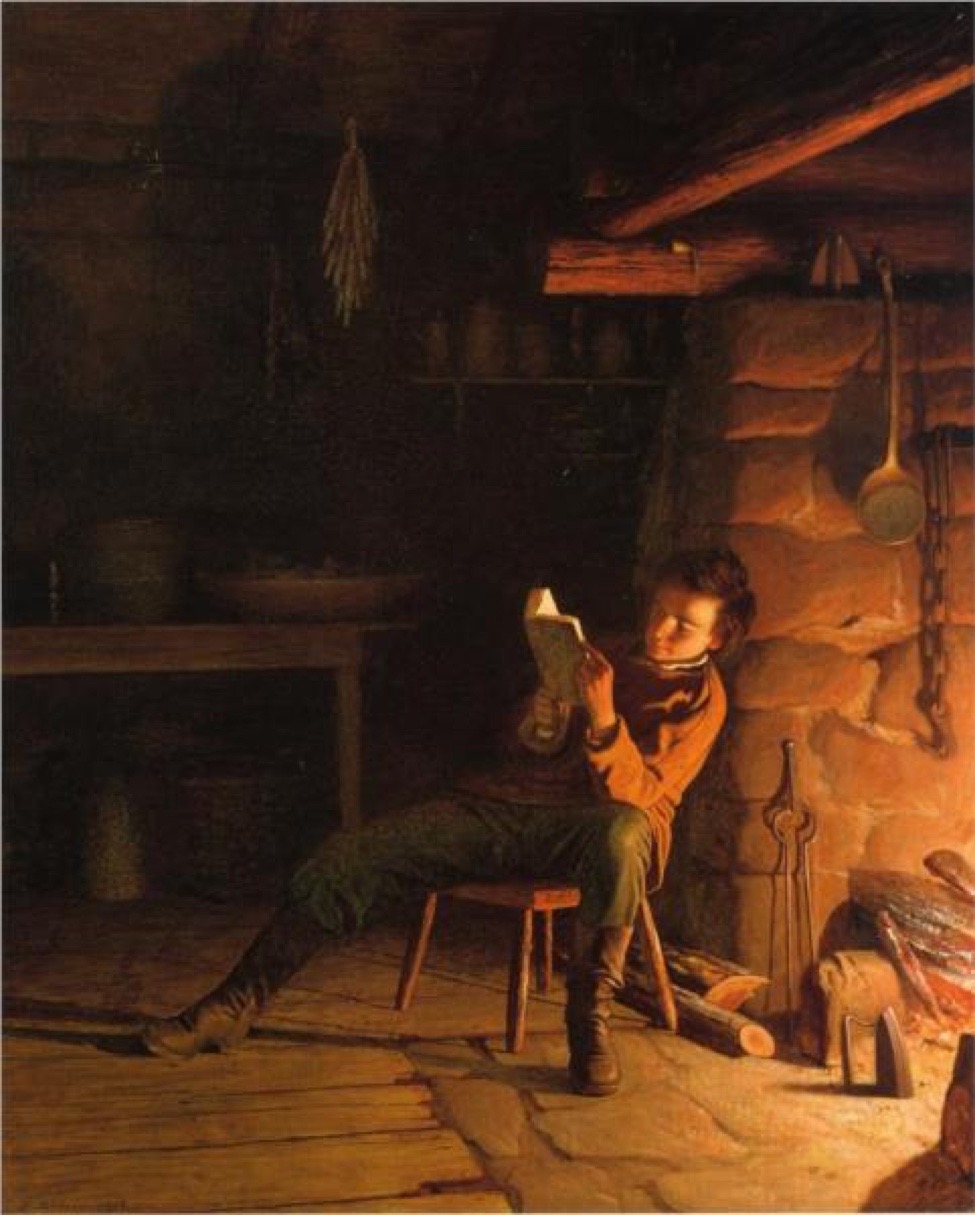
  • Our image of the post is The Boyhood of Abraham Lincoln by Eastman Johnson (1868). I first learned of it at the University of Michigan Museum of Art (UMMA) (It rocks! Check it out!). Young Abraham Lincoln is leaning into the only light available to capture the light of the words from one of the only books available to him.  His act of hope in the future, a better future for many, is an echo to me of how Jesus himself brought Light into the world, and we need to have that Light inside us and share it and Jesus, as best we can.
  • rl – I have vague memories of the folk song, sung by any number of artists, title “Abraham, Martin, and John.”  I remember Dad growing quiet, or Mom quietly crying to it or having a social sadness that I wouldn’t understand at the time, but feels all too familiar these days.  My horizon of hopes ahead for me personally is, understandably diminishing as I age — both because of my limitations and because I’ve been blessed with so many hopes realized.  But it is the thought of what we need to do for our younglings generally, my grandnephew and grandniece or any child to have a full horizon of hope that shakes any melancholy, renews my faith in Christ “who called [us] out of darkness into his wonderful light,” and sets my sail accordingly to the hope the Resurrection encompasses.

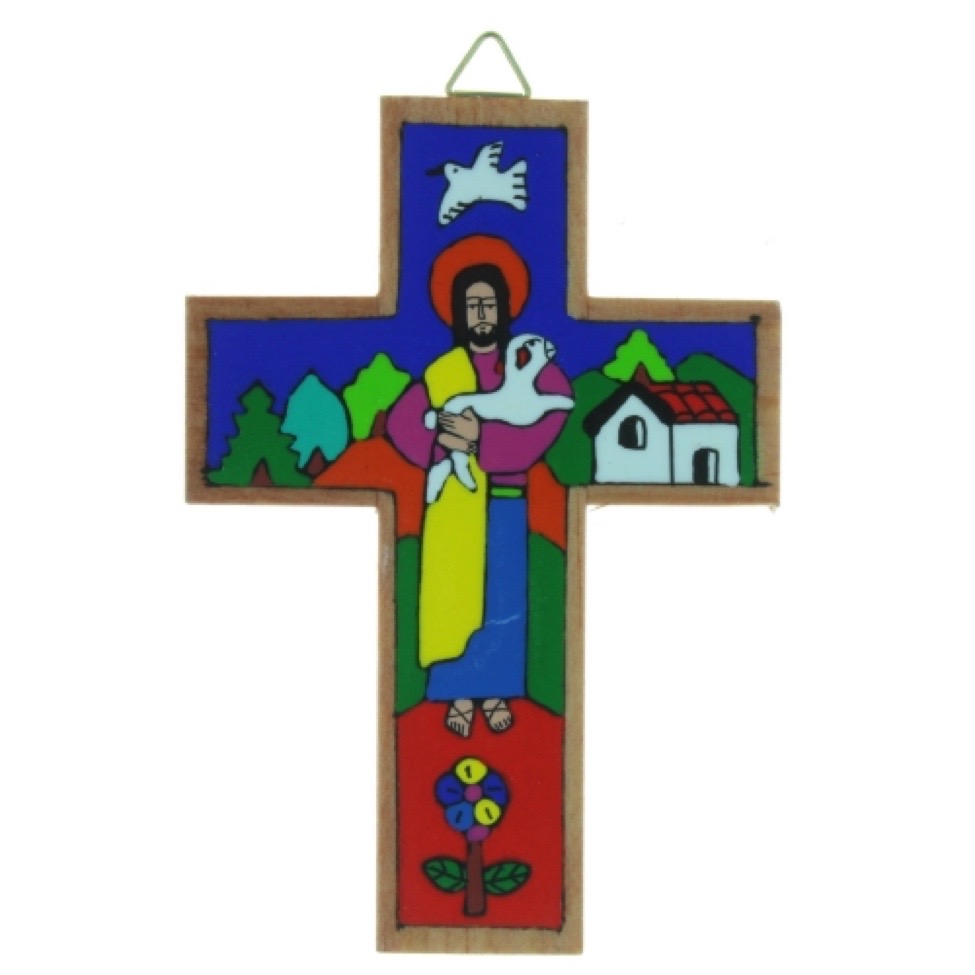
Easter Week 4 Cycle A, Good Shepherd Sunday

Our readings for this Sunday, the Fourth Sunday of Easter, the Resurrection of the Lord, also known as Good Shepherd Sunday, are here.

These are the poems, my notes, and interpretations of Fr Dennis’ homilies from the Mass of: 

  • May 7, 2017 Cycle A

______

The poems Fr Dennis references are:

In 2017, we reflected on —

  • In Jesus’ time, the relationship between the sheep and the shepherd was personal, the sheep were family.  Even now, in the south Sudan, the Dinku tribe keeps cattle for food and milk.  The cattle sleep in the tents with the humans, and there is a ritual, emotional and intentional mourning, at their eventual death. And, as we know from the Nativity stories, the shepherds were among the lowest tier of Jewish social status.  Jesus, once again, goes to the margins of society to love and be present like the best of family, the best of friends.
  • Before the Resurrection: Jesus was Master
  • After the Resurrection:  Jesus is friend and peer
    • He returns to his friends and consoles them
    • He moves on in our lives with us, together, each of us with Jesus and each other.
  • One of the reasons to go with this interpretation of friendship is that in last week’s Emmaus story, the primary experience must have been one of Jesus consoling the disciples.  Why? Because he is not teaching — none of the links of his life to the scripture are recorded!, so the intent is more to show there was meaning to this suffering, from the beginning of God’s revelation in the person of Jesus of Nazareth to the current moment of the resurrection of Jesus Christ, and a clear meaning at that (the many and uncaptured scripture references). 
  • rl paraphrases as: What was remembered from the encounter at Emmaus was not the makings of a killer scholarly paper, but the relief, the consolation of mercy from your dearest friend after fatal betrayal and abandonment by everyone.  Jesus gave their frailty context, meaning, and humanity.
  • David Budbill’s The First Green of Spring — eating and life, each day is a new resurrection.  Also, much of the resurrection is Jesus sharing meals with his friends.
  • Kiersten Dierking’s Lucky is a poem capturing the quiet work of God in our lives, much like a Good Shepherd leads us to green pastures.  The intimate trust of being safe with someone.

Easter Week 3 Cycle A

Our readings for this Sunday, the Third Sunday of Easter, the Resurrection of the Lord, are here

These are the poems, my notes, and interpretations of Fr Dennis’ homilies from: 

  • May 4, 2014 Cycle A, 5PM Mass

______

The poems Fr Dennis references are:

In 2014, —

  • D2 opened with a joke.  (!)  “Someone gets in a cab in New York City.  After a bit, the passenger has a question for the driver and, from the rear seat, taps his shoulder.  The driver violently reacts to the touch, almost careens into a bus, swings back almost over the meridian, back to the curb, and stops just short of a plate glass window.  The passenger says, ‘I’m so sorry!; I didn’t realize you were so shell-shocked from all these years driving a cab!’  The driver said, ‘Oh no — it wasn’t you!  This is my first day driving a cab; I’ve spent the last twenty-five years driving a hearse.'”  🙂
  • Jesus in the Resurrection has that sort of startle effect.
  • In his apparitions, Jesus doesn’t make much of his resurrection, or why he keeps popping up all over the place — other than the obvious reason that he’s forgiving them (for abandoning him, betraying him, and giving way to despair (Cleopas)) and offering “Peace.”
  • It is notable how gently Jesus forgives — in a delicate way, a gentle way … so he doesn’t startle or haunt or afflict them beyond the abruptness of his appearances and vanishings.
  • Last week’s e.e. cummings poem, i thank You God for most this amazing, also works this week, particularly with the line “(now the ears of my ears awake and // now the eyes of my eyes are opened)” echoing Luke 24:32 (“With that their eyes were opened and they recognized him.”)
  • In an email exchange with D2, he passed on Velázquez’s Servant Girl (c. 1620, Dublin, National Gallery of Ireland, Beit Collection) (our image today) and Denise Levertov’s ekphrastic poem composed to it, “The Servant-Girl at Emmaus (A Painting by Velázquez).  The painting depicts a young woman listening through a kitchen window onto a conversation, looking much like the Emmaus dinner.  Interestingly, that corner of the painting had been overpainted and a later cleaning revealed the interesting composition of the ordinary life (the servant girl) as central to the composition with the Divine in the background, but providing the dynamism to the painting. 

The image, the Levertov poem, and one more, Kitchen Maid with Supper at Emmaus, or The Mulata—after the painting by Diego Velàzquez, ca. 1619, by Natasha Trethewey, are available on this page of the SALT Lectionary, if you wish a single site for reflection on gospel in imagined image and poetic words.  (And, yes, in case you were wondering, I received D2’s email prior to the SALT Lectionary arriving in my inbox.)  🙂

And, of course, the Wiki link to the broader discussion of the paintings and academic (non-theological) discourse.

Easter Octave, Divine Mercy Sunday (Rebound Sunday) Cycle A

Allelujah!!  Allelujah!! He is (still) Risen!!

Our readings for this Sunday, the Second Sunday of Easter, the Resurrection of the Lord, also known as Divine Mercy Sunday and, colloquially, as Rebound Sunday, are here.

These are the poems, my notes, and interpretations of Fr Dennis’ homilies from Cycle 2014.  The Mercy Sunday masses we are visiting are: 

  • April 27, 2014 Cycle A, Noon & 7PM Masses

______

The poem Fr Dennis references is:

In 2014, we reflected that —

  • The story of “Doubting Thomas” is one of the most familiar from the Christian gospels, and it is easy to identify with Thomas.  Most of us have Thomas-like doubts about God, God’s Presence, and ourselves.
  • The apostles are in the upper room because
    • they are in fear of the other Jews (the religious leadership, who had just murdered Jesus through the crucifixion),
    • the upper room is a safe haven, a Jerusalem safehouse as it were,
    • the upper room is the last place all the apostles were gathered with Jesus, and
    • the upper room hosted the Last Supper, the place of the Institution of the Eucharist
  • Jesus meets them in peace in this place.  You can almost imagine the apostles somewhat teasing Thomas — “We saw the Lord [and you didn’t]!”
    • RL’s take is that Thomas was so wounded from the emotional journey of being the one to exhort that they go with Jesus to Jerusalem, even if they might die, to watching it all “end” horribly and running away as they all did.  That it all hurt too much.  He couldn’t deal with any more uncertainty, so he withheld himself from the thought of Jesus’ return.  Also, it is as if Jesus is saying everything I said and did in this place, prior to these wounds, is still true with the resurrected wounds.  🙂  Anyway, that is RL’s take on Thomas and place.  🙂   
  • In the gospel story, Jesus offers “Peace” and reassurance (“Don’t be afraid”) to his friends.  (rl – In one of the upper room account (Luke 21:41), Jesus asks, “Do we have anything to eat?” I imagine him looking around, maybe rubbing his belly, and looking for the chow.)
  • The image of the upper room is one in which Jesus gave himself completely in the bread and wine, in death, and the resurrection … and us?  what do we do? … or be??  This universal call in Christ, to be with each other “in the upper room” — what is it?
    • The early Jewish disciples / first unlabeled Christians?  The response was to sell everything they had and share with each other in community.
    • Nowadays?  We try to help each other.
  • e.e. cummings was a rebel in many ways, but particularly in how he found that people took their lives for granted, when, in truth, all we have to do is look around at the world and let the gift of it all fill us.
    • And so e.e. cummings offers this song of praise in i thank You God for most this amazing poem, humble and exuberant at the same time, “how should tasting touching hearing seeing // breathing any–lifted from the no // of all nothing–human merely being // doubt unimaginable You?
  • We trust in God, believe in God, follow Jesus and his way of service to others … by God’s Mercy.

In the hometown of Padre Pio, Pietrelcina, Italy, one of the churches has stations of the cross composed of scenes from the Resurrection.  Our image today is one of those, depicting the scene in the Upper Room with Thomas to one side … and that basket of fish in the Light of the Resurrected Christ.  Pax Vobis or “Peace be with you” can be seen in the upper right of the image.

Easter Sunday Cycle A

Allelujah!!  Allelujah!! He is Risen!!

This is a re-publish with a new image and a little new text, but the same sharing of the ABC readings and poems and my notes from the Fr Dennis’ Easter homilies from last year. It seems more Easterly to provide a bounty of poems! 🙂

Our readings for this Sunday, Easter, the Resurrection of the Lord are here. (https://bible.usccb.org/bible/readings/041722.cfm).  The readings are ABC, meaning they are used every Easter Sunday when the Mass of the Day is celebrated (versus the readings of the Vigil Mass, the evening before). 

Again, these are the poems, my notes, and interpretations of Fr Dennis’ homilies from seven different years.  Since the readings are the same each year, we’ll enjoy a feast of the poems, some notes, and a reflection or two of my own.  The Easters we are visiting are: 

  • April 21, 2019 Cycle C
  • April 1, 2018 Cycle B
  • 8:30 Mass on April 16, 2017 Cycle A
  • Noon Mass on March 27, 2016 Cycle C
  • 8:30 Mass on April 5, 2015 Cycle B
  • 7PM Mass on April 20, 2014 Cycle A

______

The poems Fr Dennis referenced are:

The following are notes from the earlier Easter celebrations — in later years I was often serving at other St Mary’s liturgies during the day and didn’t always get to hear the homilies associated with the poems and notes!

In 2016, we reflected on —

That we don’t know much about the actual resurrection —

  • There is nothing in scripture about it.
  • Not much else outside scripture.
  • The folded face cloth in the tomb helps John believe in the resurrection.  A robber or someone opposed to Jesus as the Messiah would not have taken such care; the cloth would have been tossed about.
  • The resurrection seems to be in the small things, in the overall fit of things.  It is not a perfect conclusion, but a sensible one, a reasonable one for a person of faith.  It leaves us “looking up.”
  • Blackbirds by Julie Cadwallader-Staub captures this with her final line “ah yes, this is how it’s meant to be.”

In 2015, we reflected on —

That Easter Sunday is a bit of a letdown from the Vigil and other Triduum masses, a less elaborate and less detailed exaltation.

  • It’s interesting to note that compared to his public ministry of healings and miracles prior to the Passion, Jesus “doesn’t do much” after the Resurrection.  He could have done fantastic things.  But other than the fish catch, there are no miracles.  Even that is not on a par with those miracles before the crucifixion or the resurrection itself.
  • It seems that all he wants to do is eat with his friends.  He seems quite content to be ordinary.
  • So … we’re going to rise, but we want to cherish what is happening all around us — food, eating, breathing, living.
  • Breathing — the miracle and depth of it in any given moment.  The Hoarfrost and Fog poem by Barton Sutter captures this beautifully.  Perhaps imagine that first breath again for Jesus.
  • We are all born again when we realize we have a God who became human so God could see things from our point of view; and he died and rose so that we could learn God’s point of view, i.e., God’s Love for us.

In 2014, we reflected on —

“In times of joy, all of us wished we possessed a tail we could wag.” W. H. Auden.

That Easter Sunday is more easily expressed in singing (or tail-wagging!) than words … and yet we try. 

  • The reign of God, the Kindom (co-opting Greg Boyle, SJ’s phrasing) that the Apostles and early Christian communities tried to live and witness in light of the mystery best captured in the gospel, its profit is … of no earthly value at all.  There is no economic profit in the Kindom.  Instead we might look to the “Invest in the millenium” stanzas of Berry’s Manifesto poem.  “Say that your main crop is the forest / that you did not plant, / that you will not live to harvest.”
  • “[P]racticing resurrection” is living life for life and love itself; there is no purpose in this world.  We have nothing to lose [in this world] because we have everything in Jesus.

For myself, I found that even the tomb of Holy Saturday begins the tail-wagging, though I’d never known there was a quote to match the feeling — let alone its source!!  And the final stanza’s reference to the resurrection fox — “making more tracks than necessary / some in the wrong direction” — was a wonderful synchronicity to my 2014 Lenten fox of Mary Oliver’s Maker of All Things – Even Healings” and currently, of course, “our” neighborhood foxes.

I struggled a bit with an image for the Resurrection.  I was not taken with (for these purposes) the Van Gogh suggestions from the SALT lectionary; tempted but not taken with Rembrandt’s Christ and St Mary Magdalene at the Tomb (is the top left angel playing marbles?)

Finally, I stumbled across a Jim Hasse, SJ prayer-poem and painting. It is titled Searching, as in the woman the woman searching for her coin like God seeks to gather us. But the dust and everydayness of this image remind me of one imagining of the resurrection: Jesus must have smelled of the earth, had a gardener’s smell to him, for Mary to think his resurrected body so. And that is a reassuring thought, to think that breathing, opening earth is part of the Resurrection.

For this year … field daisies. I always loved them, but loved them all the more learning that they are one of the few (if only) flowers found through the one huge continent of America, from north to south with its thin waist in the center. They cannot be sold or cultivated commercially because they have one bloom per stem. Isn’t that grand?

Yo Yo Ma said of his own art, “Am I trying to get it right?, or am I trying to find something?”  I might paraphrase that as “Am I trying to find someone?”  And, in Hasse’s prayer-poem, “Searching,” I find my resurrection this year is the insight that Jesus witnesses what life is like when we find Love Loving.  We can’t live that experience every single moment.  We’re human.  But we can have faith that we will have resurrection when we let God find us, and we find God, and like Jesus and to God’s delight, abide in Love Loving for all eternity.

Thirty-Fourth and Final Sunday of Ordinary Time,

The Solemnity of Christ the King Cycle C

Our readings for Sunday are here

These are the poem, my notes, and interpretations of Fr Dennis’ homily from the Masses of

  • November 24, 2019
  • November 20, 2016 5PM
  • November 24, 2013 8:30AM

_______

The songs Fr Dennis Dillon, SJ references these years are:

In 2019 notes, we reflected that —

  • The end time themes, like the traditional When the Stars Begin to Fall, embed new hopes (“what a morning”) with the endings.  This is what we know from Christ’s life and death; it all brings newness and salvation.  There are no promises about the Way, just that it is the Way to and with Love Loving.

In 2013, we reflected that —

  • The Solemnity of Our Lord Jesus Christ, King of the Universe, is an observance originated in the 1920s by the Church as a statement against the totalitarianism of Russia, Germany, and Spain, which were persecuting and murdering those who weren’t syncophants to the state.  No personal dignity or sacredness.
  • With Christ as King, each of us has dignity.
  • The United States can feel different, but we had sanctioned and institutionalized slavery (no personal dignity or sacredness) which has simply changed form in our culture over the centuries; it has not been eradicated.  Racism remains a great weight.  Yet Christ was a huge call to Africans for freedom from exile, from slavery (Moses), for the Good News, for Christ’s Kingdom, and thus they could not be kept down in spirit because of Christ the King. Or perhaps more accurately, Black spirituality and abiding faith in Jesus raised up in dignity and love and forgiveness those who believe.
  • D2 played one of Jessye Norman’s versions of “Give Me Jesus.” 
  • The simplicity but power of the message, particularly arising out of the African-American … or any marginalized or oppressed people’s experience.  Jesus is enough.
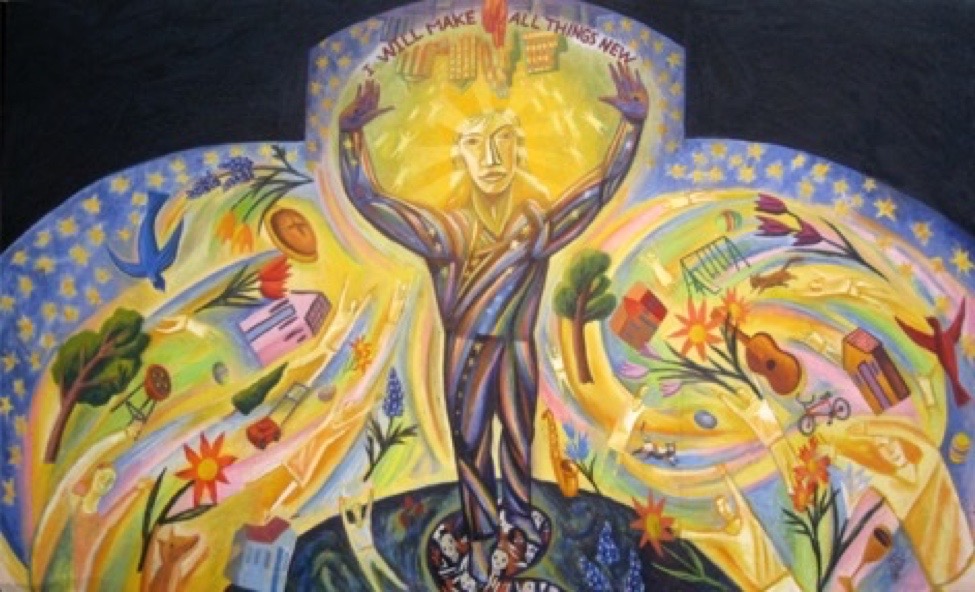
  • The featured image is the original art, “Glimpses from the New Creation,” created by W David O Taylor.

Happy Halloween!

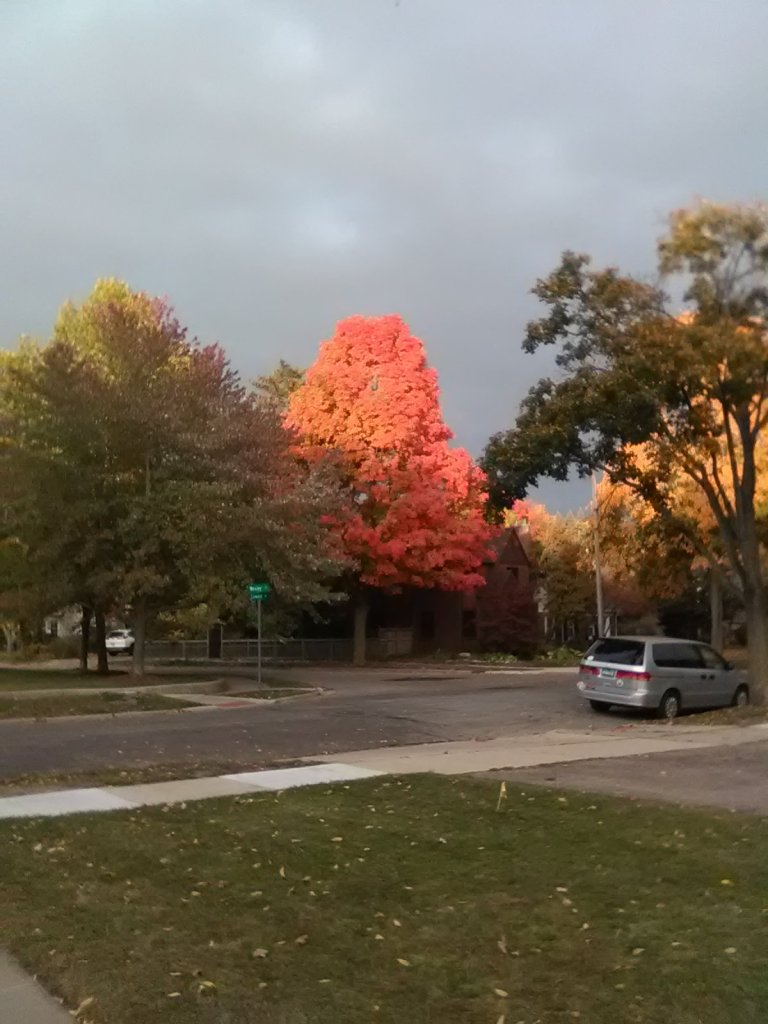
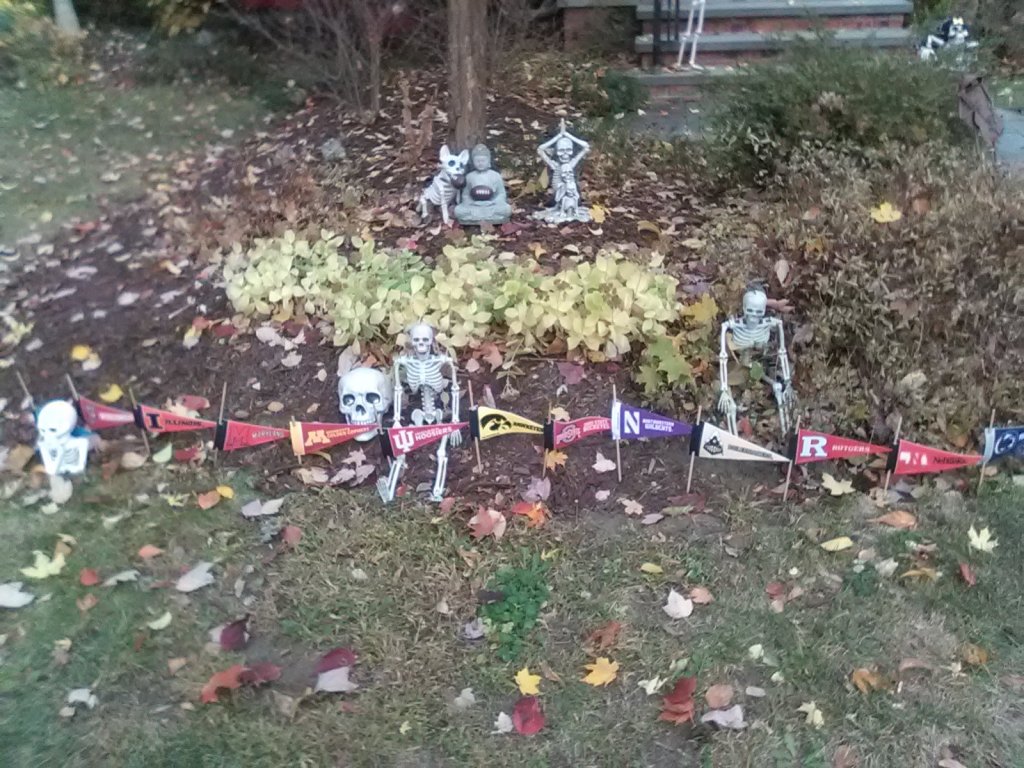
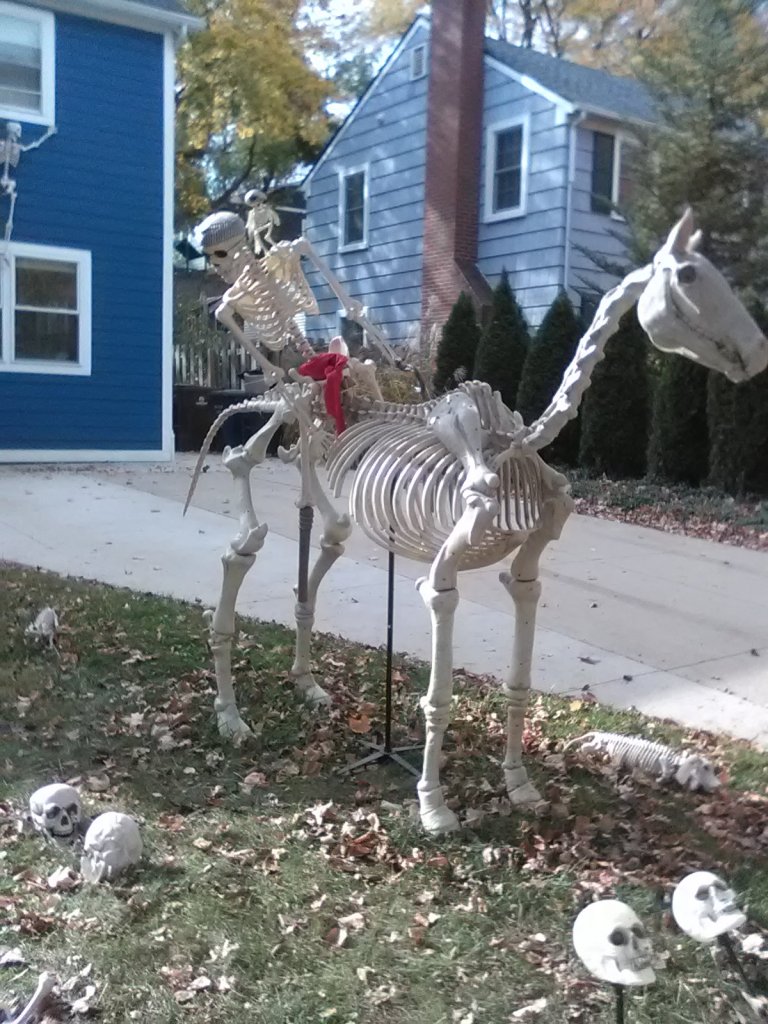
Just sharing a bit of the beauty of Midwest autumn in the United States, replayed throughout the Great Lakes region and more. The grandeur of God in the trees and their colors, the joys of Halloween decorating for the little goblin & ghostie in all of us, the backyard brawl fun of the University of Michigan v Michigan State University annual (American) football game for the Paul Bunyan trophy.